
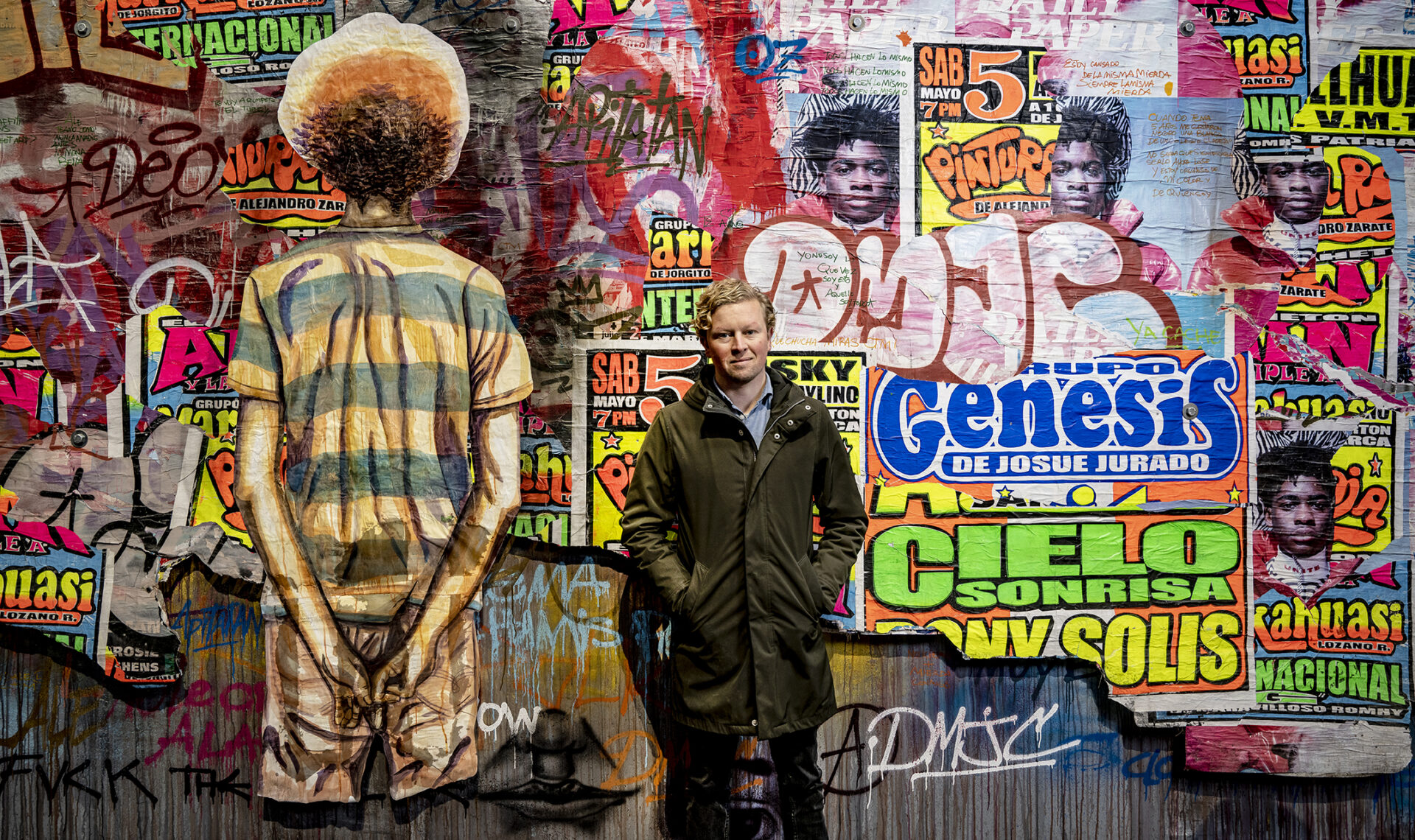

Lo Straat Museum nel 2021 ha ottenuto il premio come migliore Museo in Olanda al Tiquet Remarkable Venue Awards, il riconoscimento più importante al mondo per musei e attrazioni turistiche.
Lo Straat Museum, di cui parliamo nell’articolo sulla street art uscito sul secondo numero della nostra rivista scritto da Costanza Fenyes, si estende su una superficie di oltre 8000 m2.
È nato negli spazi di un ex-deposito situato sulla darsena del NDSM-Wharf nel quartiere Noord di Amsterdam che fino alla fine degli anni ’80 è stato il più grande cantiere al mondo in cui venivano costruite navi e petroliere imponenti.
Dopo la cessazione delle attività cantieristiche questo luogo e tutto il paesaggio che ne caratterizzava l’attività, i binari, le gru, i capannoni giganteschi e lo scalo di alaggio sono diventati una vera e propria “Kunststad” (Città delle Arti).
Il colossale capannone di costruzione navale chiamato “NDSM Loods” è diventato un monumento architettonico, un’area di sperimentazione creativa e nuove imprenditorialità (qui ha sede anche la Red Bull). Uno dei più grandi incubatori artistici dei Paesi Bassi ospita circa 400 artisti, tra designer, architetti e scenografi. Qui ha aperto al pubblico lo Straat Museum che ospita 150 opere di 130 artisti provenienti da tutto il mondo. Una collezione in continua crescita per rappresentare in modo democratico e dinamico il movimento internazionale della street art.
È molto frequente che gli artisti realizzino le loro opere durante gli orari di apertura del Museo, la cui Direzione artistica è stata affidata al giovane e intraprendente David Roos, che abbiamo intervistato per voi!
1) David could you tell us your story, about your evolution from Medicine to curator of Straat Museum? Was it an illumination on the road to Damascus or did you give life to a passion?
It was definitely the last of the two options. It has been a bumpy road with ups and downs, but during the journey I found out that my heart wasn’t at working in the hospital. During my Master International Health in Berlin I found out more and more about street art and graffiti. I started my own Instagram account (Droos86), and got to know plenty of artists. At some point I was invited by the museum (that was still in the early stages, and didn’t have the plans regarding this massive expo it shows today). Long story short, I worked there for 2 years as a co-curator, left the museum and started working for Child services, only for me to come back 1,5 years later to become the curator and have final responsibility. In the end I kept on believing I could make it to work in street art on a full time base and I did!


2) This is an extraordinary location for street art exhibitions, huge spaces, any obligation of urban planning, mobility or architectural nature. What was this building/area before?
It is the perfect location for street art exhibitions, in my opinion. The whole area households lots of creatives/studios etc. The walls that form the outside of the building of the museum are actually a Hall of Fame for graffiti writers and street artists. That’s why the link with the inside was easily made.
The building of the museum itself is a monument, and still has all the monumental remains. The whole area used to be a ship wharf where they made ships in the 1960/1970’s. The building we are in used to be a welding warehouse. And I think that’s the beauty of the museum. The rawness of the building is a perfect fit for the museum.

Eduardo Kobra è l’autore del murale dedicato ad Anna Frank sulla facciata dello Straat Museum di Amsterdam. Il ritratto vuole esprimere l’importanza del rispetto delle identità, tema particolarmente caro all’autore. Per realizzare l’o- pera sono state utilizzate 450 bombolette spray e 35 litri di vernice.
Eduardo Kobra is the author of the mural dedicated to Anne Frank on the facade of the Straat Museum in Amsterdam. The portrait wants to express the importance of respect, particularly dear to the author. To create this masterpiece were used 450 spray cans and 35 liters of paint.
Edoardo Kobra, Let me be myself.
3) Which problems or difficulties did you face with the organisation of such a space? If they were… and how expensive is the management of it?
WIth a project like this and the small team that we have we had to deal with many difficulties/problems. Simply because a museum of this size and for this art form with artists painting on side hasn’t been done before. As I already explained, the building is a monument and with that came lots of restrictions and protocols. We had to renovate the entire roof for example. Building the inside of the museum, both the collection of paintings and the different facilities came with many different challenges as well. It took us roughly five years to succeed the preparations for the museum.
4) This space houses more than 150 artworks. Have you planned a ‘turnation’ of the exhibited works for the future?
We actually are turning around paintings already. Since we are open many more artists would really love to come to the museum to paint. So the demand is high, but I can’t keep offering artists a space since the exhibition is full. I can’t change all the works at once so every now and then I take one or two out and replace them for new artists. Not an easy decision to replace them, but we have a big storage so we’ll keep the paintings and can always put them back in a later stage, if we would like.
5) It can happen that while visiting the museum visitors can see an artist paint live! What’s your opinion about the success of street art in the last decade? Why is it so attractive for the public?
That’s right. How cool is that!? Many visitors that come can’t really imagine that all the works were made on side. At the exact place where they see them hanging in the museum. By having artists paint in the museum you bring it more alive. You make the experience of visiting the museum more complete.


Street art became more and more visible over the last decade. Many artists had a big influence in that, for example Banksy. People can empathise with his art and the topics he speaks about. Besides that, you see street art in everything. Fashion, branding, commercials. People see the added value of it more and more, and it becomes less and less a taboo.
6) So many artists from around the world gathered in Straat. Canvases were realised with different techniques and each of them created specifically for the Museum. Northern European culture welcomes contemporary arts more easily. Museums could be a key to understanding the present, social changes, they could be leaders in the dissemination of contemporary art and cultural practices, it just depends on what they offer. If you could give some advice to Italian museum tradition on how to reconcile modern and ancient art, what would you suggest?
In my opinion, street art is one of the art forms of the present time. Artists are very skillful and professional in what they do, and in many ways also use techniques artists used several centuries ago. As I said earlier, street art and graffiti is less and less a taboo and people see the beauty of the creations. In Holland we already experience that the more traditional museums are adding works of street art in their exhibitions. There are plenty of very talented Italian artists. That might be a first good step for museums in Italy.
7) Ritual question: is everything created (contemporary) art? What makes something art?
If you look up the question WHAT IS ART, THE ANSWER IS: “the various branches of creative activity, such as painting, music, literature, and dance.” In my opinion, everything that was created from a creative perspective should be seen as art. Art is very personal, and not everybody has the same taste, so it is a broad concept. As long as someone sees a creation as art, it’s art to someone(s). It’s a bit similar if you ask the question what is street art. In my opinion, that is a broad range of art that was created if the public space. From murals to small urban installations, from stickers to all kinds of posters.
This artwork is a reproduction of a stencil piece that Fake did at NDSM at the beginning of the Corona pandemic. ? @jirobosma